
How Payday Loans Work: 2026 Complete Guide
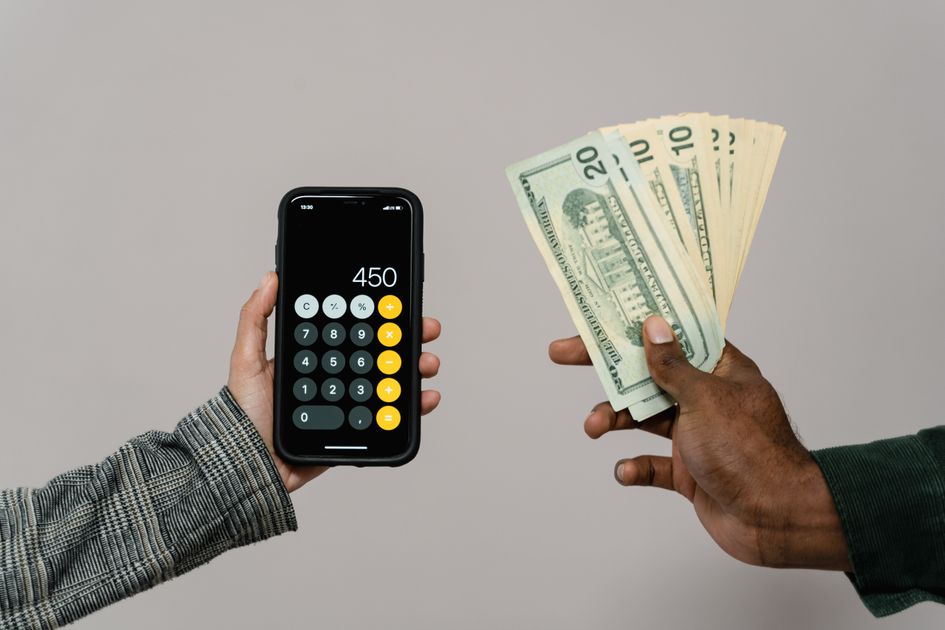 Photo by Tima Miroshnichenko on Pexels
A payday loan is a short-term, high-cost loan typically due on your next payday. You borrow a few hundred dollars, agree to a fixed fee (usually $10–$30 per $100 borrowed), and authorize the lender to debit your bank account on a specific date. The structure sounds simple, but the math is harsh: a $15-per-$100 fee on a 14-day loan equals an APR of 391%, and a single rollover doubles the cost.
In this guide we walk through the full mechanics — from application to repayment to what happens if you can’t pay — and explain why CFPB, FTC, and state regulators classify payday lending as one of the highest-risk consumer products. The goal isn’t to scare you away from emergency borrowing. It’s to make sure that if you ever do borrow this way, you know exactly what you signed up for, and you’ve genuinely exhausted the cheaper paths first.
Important consumer warning: Payday loans commonly carry APRs of 300–600% or higher. We strongly recommend exploring cheaper alternatives first: NCUA Payday Alternative Loans (PALs, capped at 28% APR), employer payroll advances (DailyPay, Payactiv), cash-advance apps (Earnin, Dave, Brigit), credit-union small-dollar loans, 0% APR credit cards, or local hardship programs. If you take a payday loan, treat it as a one-time emergency — never as a recurring solution. CFPB and FTC consumer protections apply. Some states ban or cap payday loans entirely.
How This Guide Works
We built this explainer using CFPB definitions, FTC consumer guidance, NCUA PAL rules, and field-level data from the Pew Charitable Trusts on borrower behavior. Where we cite numbers ($520 average annual fees per borrower, 10 loans per year, 12 million users annually), they come from CFPB or Pew. We also model real loan scenarios using typical fee schedules from major lenders so you can see how rollovers compound.
The Five-Step Lifecycle of a Payday Loan
| Step | What Happens | What to Watch For |
|---|---|---|
| 1. Application | You submit ID, paystub, and bank info online or in store | Watch for “lead generator” sites that resell your data |
| 2. Approval | Approval in minutes; minimal credit check | ”Approved” doesn’t mean “best rate” — check the APR |
| 3. Funding | Cash, prepaid card, or ACH same-day | Online ACH adds 1 business day |
| 4. Repayment | Lump sum (principal + fee) auto-debited on due date | Insufficient funds trigger NSF fees |
| 5. Rollover or default | If you can’t pay, lender offers rollover for another fee | This is the debt trap — avoid at all costs |
The Real Cost of a Payday Loan
A typical loan: $300 for 14 days at $15 per $100.
- Principal: $300
- Fee: $45
- Total due in 14 days: $345
- APR: ($45 / $300) × (365 / 14) = 391%
If you roll the loan over twice (3 total cycles, 42 days), you’ll pay $135 in fees on a $300 loan — 45% of principal — and you still owe the original $300. Pew data shows the average borrower has the loan outstanding for 5 months and pays $520 in fees over the year.
How Payday Lenders Make Money
Payday lenders earn revenue primarily from repeat borrowers. The CFPB found that 80% of payday loans are rolled over or followed by a new loan within 14 days. The product is designed for repeat use: short terms, large lump-sum repayments, and direct access to your bank account create predictable cycles. Lenders typically make 5–10x more on a stuck borrower than on a one-and-done borrower.
What the CFPB Payday Lending Rule Requires
The CFPB Payday Lending Rule includes two main provisions:
- Ability-to-repay underwriting for many short-term and balloon loans (specific provisions have been modified through rulemaking — check current CFPB guidance).
- Payments provision: lenders cannot make more than two consecutive debit attempts on an account without new authorization. This prevents the cascading NSF fee problem.
These rules don’t eliminate the high cost — they limit some of the most harmful collection behaviors.
Comparison: Payday Loan vs Cheaper Alternatives
| Product | Cost on $300 / 14 Days | APR | Lump or Installment? |
|---|---|---|---|
| Payday loan | $45 | 391% | Lump |
| Possible Finance | ~$45 | ~200% | 4 installments |
| OppLoans (installment) | ~$15 (prorated) | 99% | 9–18 months |
| NCUA PAL | ~$3 + $20 fee | 28% | 1–6 months |
| Earnin | $0–$5 tip | ~12% | Lump from paycheck |
| DailyPay (EWA) | $0–$5 | ~0% | From earned wages |
What Happens If You Can’t Pay
- Insufficient Funds (NSF): Your bank charges $30–$35 per failed debit; lender may charge a returned-payment fee.
- Multiple debit attempts: Restricted under CFPB Payments Provision — but state law may allow more attempts.
- Collections: Account is sold to a debt collector; the FDCPA applies — collectors cannot harass or threaten you.
- Credit reporting: Many payday loans aren’t reported when paid on time but defaults often land on your credit report through collections.
- Lawsuit: Lenders can sue for unpaid balances. Courts may garnish wages depending on state law.
How to Borrow Safely (If You Must)
- Borrow the minimum you actually need. Round down, not up.
- Write the repayment date on your calendar and set a paycheck-day reminder.
- Plan repayment first, borrowing second. If you can’t see how the loan gets repaid in 14 days, do not take it.
- Refuse the rollover. This is the single highest-impact rule — rollovers are where debt traps form.
- Have a backup repayment source. If your paycheck won’t cover full repayment, pre-arrange a side gig or family loan.
Recommended Offers
💡 Editor’s pick: Open a Chime account for SpotMe — no-fee overdraft up to $200 covers most of the situations people use payday loans for.
💡 Editor’s pick: Apply for a credit-union PAL before your next emergency. 28% APR + $20 fee saves hundreds compared to payday lending.
💡 Editor’s pick: Set up Earnin or MoneyLion now so a $0–$5 advance is one tap away when an unexpected bill arrives.
FAQ — How Payday Loans Work
Q: How much can I borrow on a payday loan? A: Typically $100–$1,000 depending on state law and your income.
Q: Do payday lenders check credit? A: Most don’t pull traditional credit reports but verify employment, bank activity, and prior payday loans through specialty databases like Clarity or DataX.
Q: When is the loan due? A: Usually on your next payday, often 7–31 days from origination.
Q: Can I pay early without a penalty? A: Yes — most states require lenders to accept early repayment without penalty.
Q: What if my paycheck is direct-deposited late? A: Contact the lender before the debit attempt. They may extend by a day or two; otherwise NSF fees stack up fast.
Q: Are payday loans ever a good idea? A: Only as a true one-time emergency when every cheaper alternative has been exhausted — and never as a recurring solution.
Related Reading on Loan4Rush
- Payday Loan Alternatives
- Payday Loan Laws by State
- Payday Loans with No Credit Check
- Payday Loan vs Personal Loan
- How Cash Advance Apps Work
Final Verdict
Payday loans work because they’re fast and don’t care about your credit. They fail their users because the structure — short term, lump sum, direct bank-account access — almost guarantees rollovers for anyone who couldn’t comfortably afford the loan in the first place. Use a PAL, an earned-wage program, or a cash-advance app first. If you ever do borrow at payday rates, treat it as a one-time event and pay it off in full on day 14.
This article is for informational and educational purposes only and is not financial or legal advice. Payday loans carry very high APRs and serious risks. Always exhaust cheaper alternatives first and consult a nonprofit credit counselor (NFCC member) before taking high-cost short-term debt. APRs, fees, and state laws change frequently — verify with official sources before borrowing. Loan4Rush may receive compensation for some placements; rankings are independent and prioritize consumer protection.
By Loan4Rush Editorial · Updated May 9, 2026
- payday loans
- how it works
- 2026
- emergency finance